| | | | | | Coming Together in Orange In Anishinaabe teachings, the Grandmother Moon guides us, offering seasonal teachings rooted in care, balance, and relationships. These teachings will guide us throughout the year. The Thimbleberry Moon (Datkaagmin) is a time to reflect on our connection to the world around us and the responsibilities we carry within it. The Thimbleberry teaches us that growth and healing are ongoing, often happening quietly and steadily as we learn and carry knowledge forward. That invitation to reflect feels especially meaningful as we approach Orange Shirt Day and the National Day for Truth and Reconciliation. September offers an opportunity to listen to the truths and experiences of Survivors, honour the children who never returned home, and consider the responsibility each of us carries to continue learning and taking action. This September, we invite you to wear your commitment to reconciliation proudly and visibly through our 2026 Orange Shirt, Held in Care. Let your Orange Shirt be a conversation starter, a sign of solidarity, and a reminder of the truths we have a responsibility to carry forward. But don’t let the journey end with what you wear. Keep learning. Keep listening. Keep reflecting. Keep showing up. In this month’s newsletter, we share the meaning behind this year’s design, why Orange Shirt Day matters, and ways you can continue your reconciliation journey beyond September 30. Chi Miigwech for walking alongside us, Your AHF Team |
| | |
|
| | |
|
| Every September, orange shirts become a visible symbol across Canada. But behind that colour is a story and a responsibility to understand what it represents. Orange Shirt Day honours the Indigenous children who were taken from their families and communities through the residential school system, the Survivors who continue to carry those experiences, and the children who never returned home. The story behind Orange Shirt Day begins with Phyllis Webstad of Stswecem'c Xget'tem First Nation. In 1973,six-year-old Phyllis arrived at St. Joseph Mission Residential School wearing a new orange shirt her grandmother had bought for her. She had chosen it herself and was excited to wear it on her first day of school. When she arrived, the shirt was taken from her and never returned. Imagine being six years old, away from your family and everything that feels like home, and having even the clothing you arrived in taken from you. For generations of Indigenous children, that loss went far beyond clothing. The residential school system separated children from their families and communities and sought to strip away their languages, cultures, identities and Traditional ways of knowing. The familiar sounds, stories, foods, language and people of home were replaced by an institution that told children they could not be who they were. The orange shirt has come to represent so much of what was taken and the fundamental truth that every child deserved to have their identity, culture and sense of belonging protected. |
|
|
 | Phyllis's story helped inspire the message Every Child Matters. Today, wearing orange is a visible way to honour Survivors and their families, remember the children who never returned home, and ensure these truths are not forgotten. But the meaning of the Orange Shirt goes beyond one day. When we understand the story behind what we wear, we can carry that knowledge with us and allow it to shape how we participate in reconciliation on September 30 and throughout the year. Wear orange. Know the story. Carry it forward. |
|
|
| | | Wear Your Commitment: Introducing Held in Care |
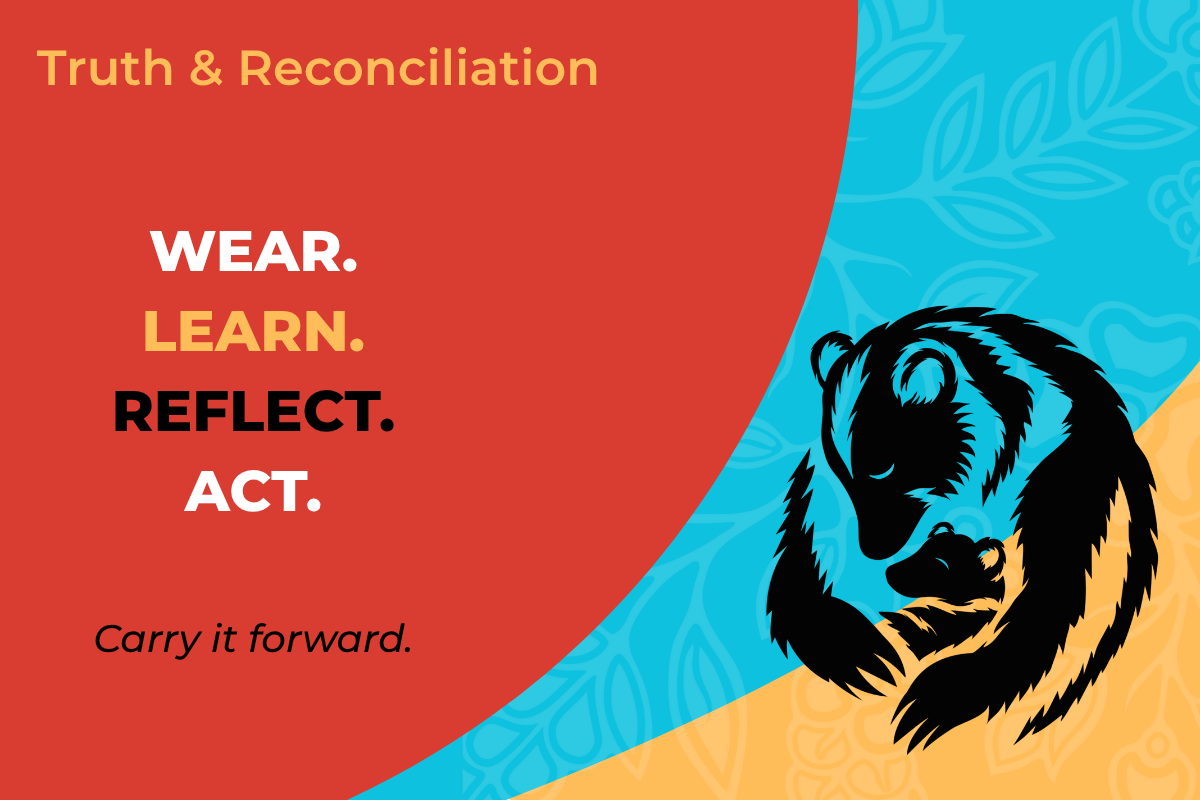
| This year’s Orange Shirt design, Held in Care, was created by Indigenous artist Joshua Hunt. The design centres on a mother bear embracing and sheltering her cub, symbolizing protection, strength, resilience, and unconditional love. Through the use of positive and negative space, the child is visually held within the mother’s form representing the importance of creating a safe and nurturing environment for every child. The bold, minimal illustration was intentionally created for the Orange Shirt, using the orange of the shirt itself as part of the artwork. At its heart is a message of care, protection, hope, and healing and a reminder of what every child has always deserved. This September, we invite you to wear Held in Care proudly and visibly. Let your Orange Shirt start conversations. Let it show that you are listening, learning, and choosing to be part of the ongoing journey toward reconciliation. Purchasing and wearing an Orange Shirt is one way to make your commitment to reconciliation visible, but it shouldn't end there. |
|
|
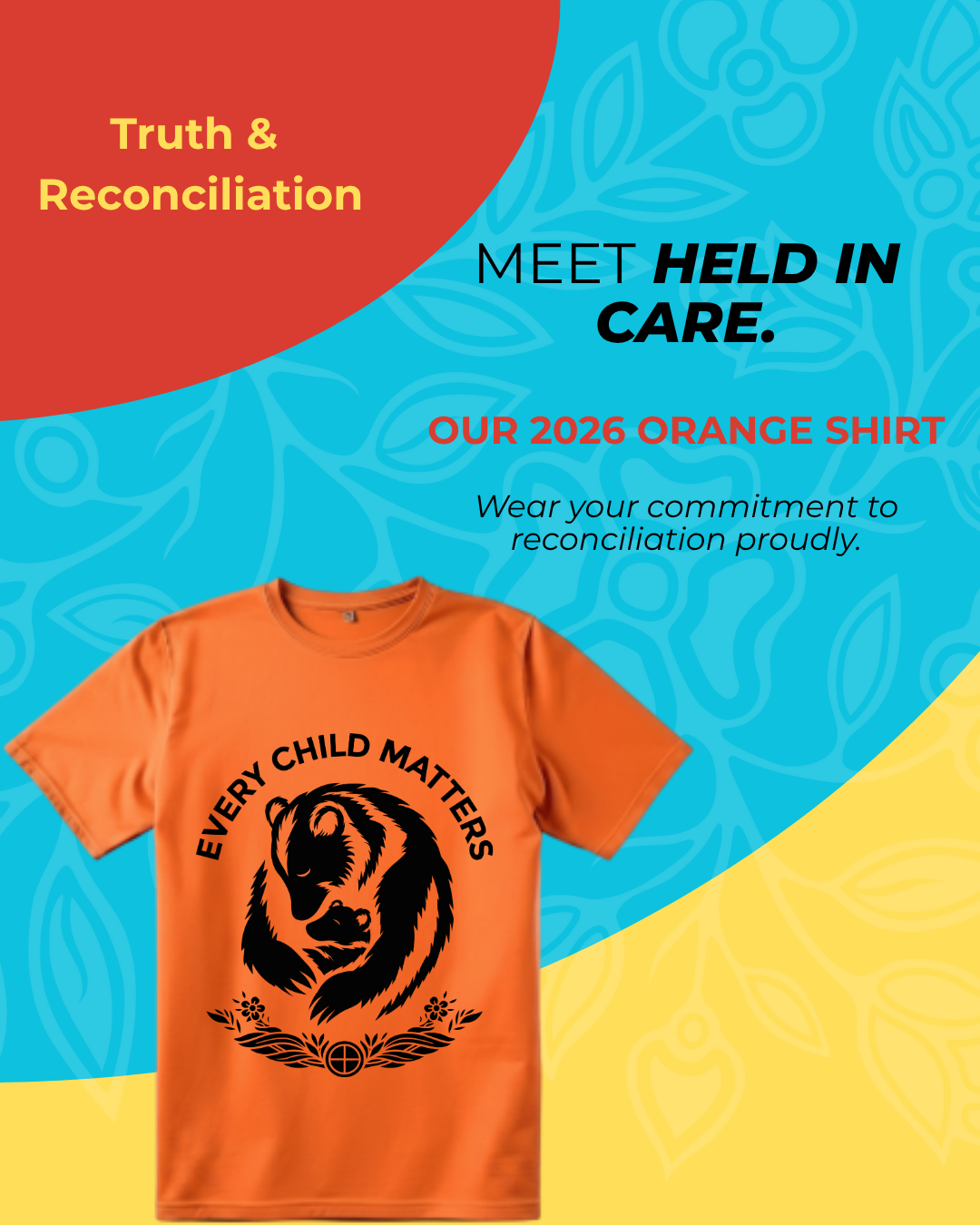 | As you put on Held in Care, take a moment to ask yourself: What does reconciliation look like to me? Maybe it means learning more about the history and ongoing impacts of colonialism. Maybe it means having conversations with family and friends, seeking out Indigenous voices and perspectives, supporting Indigenous-led organizations, or reflecting on the role you can play in creating change. What will you do this September to recognize Orange Shirt Day and the National Day for Truth and Reconciliation, and how will you carry it forward beyond September 30th? There is no single action that completes reconciliation. It is something we continue to learn about, reflect on, and put into practice. Wear your commitment proudly. Then carry it forward. Later this September, we’ll be creating an opportunity to come together in community, reflect, and take another step on that journey. More details are coming soon. |
| |
|
|
|
| | | Reflections from Our Executive Director: Reconciliation and the Role You Can Play As we approach the National Day for Truth and Reconciliation, we sat down with Anishnawbe Health Foundation Executive Director Amelia Pruchnicki to reflect on what reconciliation can look like through learning, relationship-building and support for Indigenous-led healthcare. Drawing on her first year leading the Foundation and her own reconnection journey, Amelia shares what she has learned about Indigenous approaches to health and healing and why reconciliation asks us to move beyond reflection toward continued action. |
| 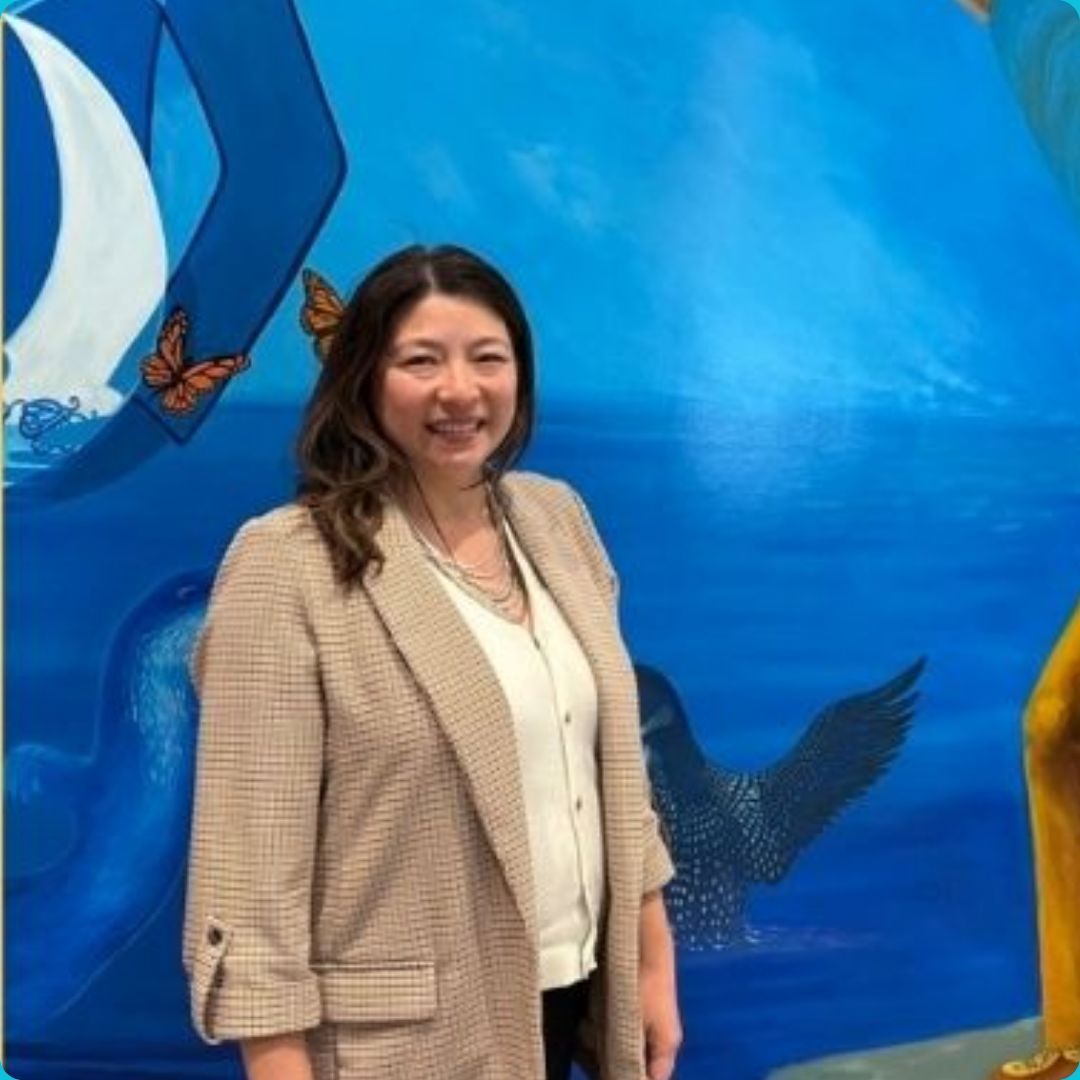 | | Gia: What does the National Day for Truth and Reconciliation mean to you personally? Amelia: For me, it’s a time to reflect on the truths of our shared history and how they continue to shape Indigenous people and families today. My own reconnection journey has helped me understand that the cultural disconnect I’ve experienced didn’t happen by accident. For generations, colonial systems sought to separate Indigenous people from their cultures, families, languages, and Traditional ways of knowing. Reconnecting with my culture feels like an act of resistance. Every opportunity I have to learn, participate in culture, and share that knowledge with my sons is a way of reclaiming and carrying forward something that colonial systems sought to take away. |
|
|
| | | | | | Gia: Why is understanding Indigenous approaches to health and healing an important part of reconciliation? The health inequities Indigenous people experience today cannot be separated from the impacts of colonization. Those impacts continue to shape the realities affecting Indigenous health today. At the same time, Indigenous approaches to healing recognize that wellbeing is holistic; caring for the whole person physically, mentally, emotionally, and spiritually. Health is shaped by more than what happens in an examination room. Housing, family, culture, community, and access to Traditional Healing can all play a role. To me, reconciliation in healthcare means recognizing Indigenous knowledge and ensuring people have access to care that sees culture as essential to healing. |
|  | Gia: How can people move from learning about reconciliation to taking meaningful action? Amelia: Listening and learning from Indigenous voices has to come first. But reconciliation also asks us to consider what we do with what we learn. Action can look different for everyone. It might mean continuing to educate yourself, having conversations with family and friends, seeking out Indigenous voices, challenging assumptions, or supporting Indigenous-led organizations. At AHF, that means helping make culturally grounded healthcare accessible to Indigenous people in Toronto. When you support the Foundation, you’re helping create space for care that recognizes culture as essential to healing and gives people the dignity of receiving care that sees them for who they are. “It’s really one conversation at a time.” Reconciliation can feel like an enormous idea, but every conversation, relationship, and choice matters. My hope is that September 30 isn’t an ending, but a reminder to keep listening, learning, and carrying that commitment forward throughout the year. |
|
|
| | |
|
| | We’d love to hear from you...... Take a few minutes to share what connects you to Anishnawbe Health Foundation and what matters most to you about the work of Anishnawbe Health Toronto. Your perspective helps us better understand our community and how we can continue to strengthen our connection with you. |
| |
|
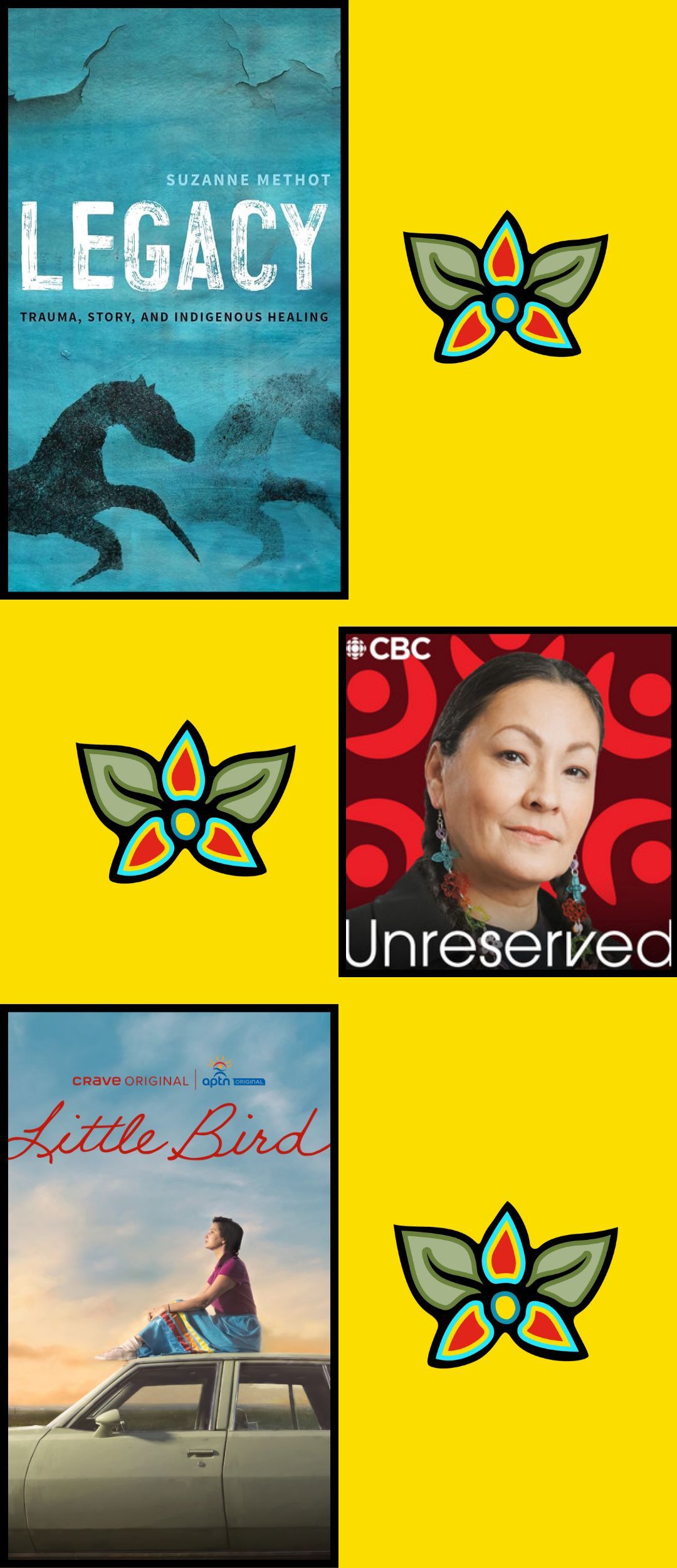
| | | Donor Learning Corner: Honouring Indigenous knowledge, voices and experiences Book of the month: Legacy: Trauma, Story, and Indigenous Healing by Suzanne Methot Explores the lasting impacts of intergenerational trauma and the power of Indigenous healing. Through personal storytelling, Methot highlights how culturally informed care and Indigenous knowledge support healing and reconciliation. Podcast Pick: Sacred Seven: Sabe brings humility, honesty and harmony In this episode of Unreserved, host Rosanna Deerchild explores the Grandfather Teaching of Honesty through the Sabe. Listeners are encouraged to reflect on their relationships with themselves, others, and the land while learning how honesty can deepen understanding and reconciliation. Watch This: Little Bird is a powerful six-part series that follows a young Indigenous woman searching for her family after being separated from them during the Sixties Scoop. Through her journey of reconnection, the series explores the lasting impacts of colonialism while celebrating the strength of culture, family, and healing. |
| |
|
| | Connect With Us! Want more frequent updates on the impact of your gifts? Join our online community for daily stories from the Health Centre and teachings on Indigenous culture and ways of being. -
Instagram: Follow us at @anishnawbehealthfoundation for daily cultural teachings, uplifting stories of resilience and health center news -
LinkedIn: Follow us at @Anishnawbe Health Foundation For sector news, healthcare innovation and foundation milestones |
|
|
| | |
|
| | |
|
|